
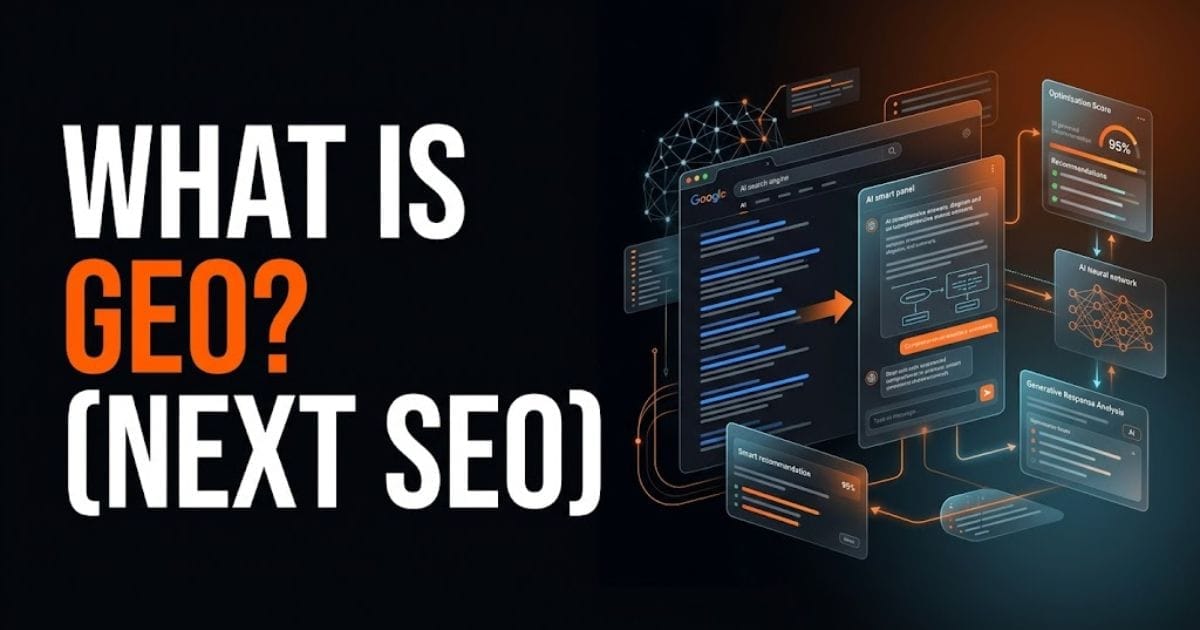
Decoding the Generative Search Landscape
If you are still optimizing for a list of ten blue links, you are living in the past. By 2026, the search landscape is dominated by AI-generated summaries that answer queries directly. This is where GEO (Generative Engine Optimization) comes into play. You cannot just hope for a click anymore; you have to be the definitive answer.
Using AI tools for digital marketers is no longer an option for your strategy. Most users now interact with conversational interfaces that synthesize information from across the entire web. If your content is not structured for these models, you are effectively invisible. Let’s look at how this works.
In 2026, search engines do not just find websites; they read and interpret them. They process your data to provide a direct response to a complex user query. GEO (Generative Engine Optimization) focuses on how Large Language Models (LLMs) perceive your expertise and brand authority.
You need to understand that LLMs value different metrics than the crawlers of a decade ago. They look for consensus across high-authority digital platforms. It is a different kind of competition now. You must be the source the AI trusts most.
Traditional SEO vs. Generative Engine Optimization
Traditional SEO was about keywords and backlinks to drive traffic. While those still matter, GEO (Generative Engine Optimization) prioritizes citation probability. Think of it as public relations for machines. You want your brand to be the footnoted authority in a generated summary.
Your team should focus on ‘quotability’ rather than just raw search volume. When a generative engine compiles an answer, it pulls from fragments of data. If your information is hard to parse or inconsistent, you lose. It is that simple.
Core Ranking Factors for AI Models
What makes an AI choose your content over a competitor’s site? Research shows that technical accuracy and clear citations are the primary drivers. If you use AI tools for digital marketers to analyze your content, you can see how LLMs digest your pages in real-time.
Credibility and Consensus
AI models are trained to avoid false information by looking for verified facts. You must ensure your claims are backed by external, verifiable data. If other industry leaders mention your brand, the AI sees you as a reliable source. Trust is the primary currency of 2026.
Structured Data and Technical Clarity
Schema markup is more important than ever for your technical team. It provides the map that AI engines use to navigate your complex content. If you make it easy for the engine to find the ‘who, what, and where,’ you increase your GEO (Generative Engine Optimization) score. Do not hide your best info behind walls.
Narrative Authority
LLMs prefer content that shows a clear depth of knowledge. Shallow, repetitive articles get ignored by the synthesizers in favor of original research. You should write for humans but structure for machines. This balance is essential for survival in a generative world.
Future-Proofing Your Brand for 2026
The shift toward generative search means your traffic sources will change significantly. You might see fewer direct clicks but higher conversion rates from the users who do arrive. This is because users arriving from an AI summary are already pre-informed. They know what they want from you.
Start by auditing your existing content through the lens of GEO (Generative Engine Optimization). Does it answer specific, complex questions with unique insights? Does it provide data that cannot be found elsewhere? These are the questions your team needs to answer today.
Refining Your Strategy
You should integrate AI tools for digital marketers into your daily workflow to stay ahead. Use them to simulate how models like GPT-6 or Gemini might summarize your landing pages. If the AI summary is incorrect, your content is the problem. Fix it immediately.
Monitoring AI Brand Mentions
Track how often your brand is mentioned in generated responses. This is the new primary ranking metric. If you are not appearing in the summaries for your key services, you need to revisit your authority-building strategy. It is a constant cycle of refinement.
The Final Word on GEO
The era of simple search is over. By mastering GEO (Generative Engine Optimization), you ensure that your brand remains central to the digital conversation. You cannot afford to wait and see how this plays out.
Are you ready to change your approach? Your competitors likely already are. Focus on clarity and make sure the machines know exactly who you are. This is the new reality of the web.