
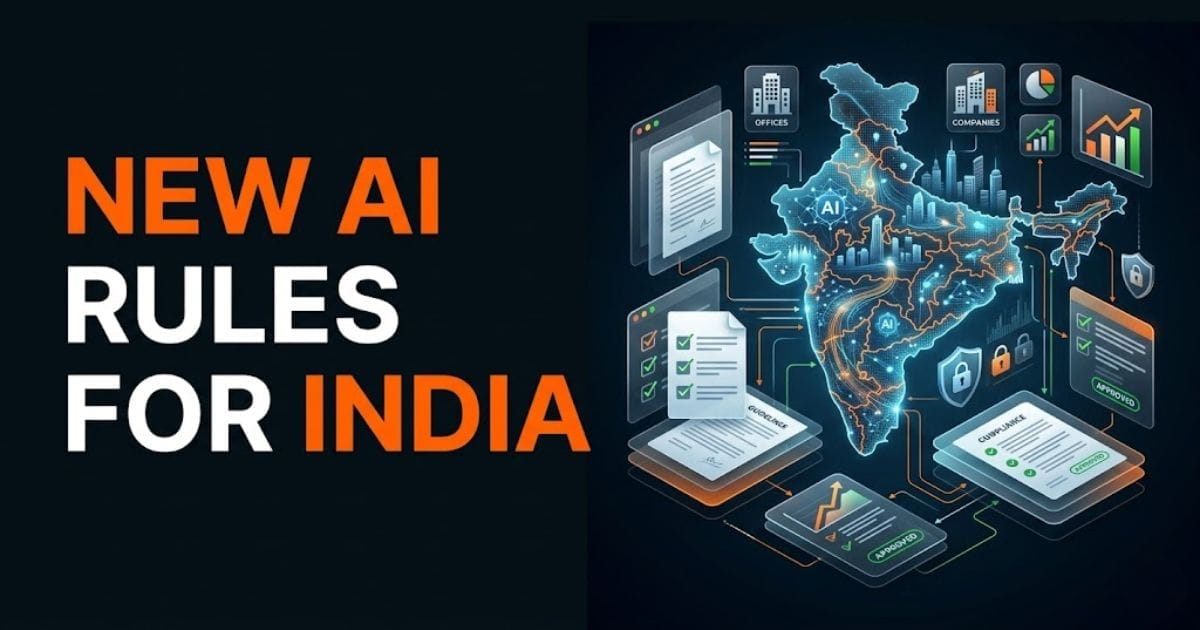
The Countdown to Regulatory Clarity
The wait is finally over for the private sector. The Indian government has just released the preliminary framework for India’s AI Policy 2026, and your business needs to pay attention. This isn’t just another set of suggestions from a think tank. It is a mandatory roadmap that will change how you collect data and deploy software.
You might think two years is a long time to prepare. It isn’t. The groundwork for compliance starts now because the policy demands a total rethink of your digital infrastructure. If you ignore these rules, you risk heavy fines and operational shutdowns. It’s time to look at your tech stack with a critical eye.
For teams currently using AI tools for digital marketers, this news changes your procurement strategy immediately. You can’t simply plug in any foreign-made software and assume it follows local rules. The burden of proof is now on you and your leadership team.
The Core of Data Localization
The most significant pillar of the new regulation is data localization. The government wants to ensure that data belonging to Indian citizens is stored and processed on servers physically located within the country. This move aims to protect national interests and give the state better oversight of sensitive information.
This shift will likely drive up your compliance costs in the short term. You will need to audit your cloud providers and verify where your customer databases actually sit. It sounds like a headache because it is. Many companies have relied on cheap, offshore servers for years, but those days are coming to an end.
You should start asking your vendors about their server locations right now. Don’t wait for the 2026 deadline to find out your data is floating in a restricted zone.
Algorithmic Transparency and Accountability
India’s AI Policy 2026 also introduces strict requirements for algorithmic transparency. Under these new rules, companies must be able to explain how their automated systems reach specific conclusions. If your software denies a loan or filters a job application, you must provide a clear reason for that outcome.
Ethical AI frameworks are moving from the HR handbook into the legal code. You will be required to show that your models are free from bias and do not discriminate based on protected characteristics. This is a massive shift for companies that treat their code like a protected secret.
Does your team actually know how your current models make decisions? If the answer is a shrug, you have a lot of work to do before the deadline hits.
Marketing Restrictions and Consumer Privacy
Digital marketing is about to face its toughest era yet. The upcoming policy places tight restrictions on how AI tools for digital marketers handle predictive modeling and behavioral tracking. You will no longer be allowed to scrape data without explicit, granular consent from every individual user.
This aligns with global data protection laws but adds a layer of local enforcement that is much more aggressive. High-speed automation will not be a valid excuse for violating a user’s privacy rights. You need to build a culture of privacy-first thinking within your creative and technical teams.
First-party data is going to be your most valuable asset. Stop relying on third-party sets that might not meet the new legal standards for India’s AI Policy 2026.
The Rise of Sovereign AI
The government is heavily incentivizing the development of sovereign AI. They want local businesses to build models that understand India’s specific cultural nuances and linguistic diversity. This isn’t just about pride; it’s about reducing the country’s dependence on a few global tech giants.
This creates a unique opportunity for local startups and established firms to pivot. You should look for homegrown solutions when you next evaluate AI tools for digital marketers. These local platforms will likely be built with the 2026 policy in mind from day one.
Why stick with a global model that doesn’t understand your local market? It’s a smart move to look at what Indian developers are building right now.
Steps to Ensure Future Compliance
Your first step is to conduct a full audit of your current data flow. Map out where every byte of customer information goes and who has access to it. You also need to appoint a dedicated officer to oversee these ethical AI frameworks and report on progress.
Training your staff is the next priority on your list. Your employees need to understand India’s AI Policy 2026 just as well as your legal counsel does. This is a team effort that requires buy-in from every department, not just the IT room.
The clock is already ticking for every business operating in the Indian market. Stay sharp, stay informed, and start your transition before the rules become set in stone.