The Shift Toward Open-Source Sovereignty
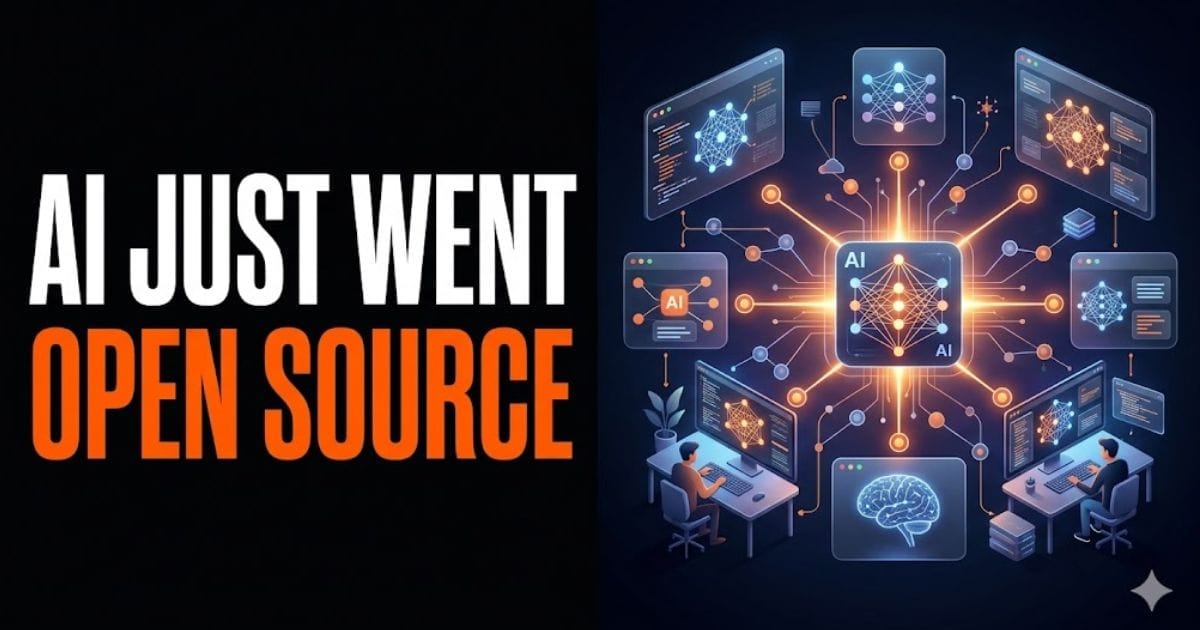
Mark Zuckerberg is no longer just building a social media empire. With the release of Meta’s New Llama AI Model, the company is effectively handing you the keys to a high-performance engine for your marketing stack. This isn’t just another update; it is a direct challenge to the closed systems of OpenAI and Google.
For too long, your team has been tethered to expensive subscription models. Meta’s New Llama AI Model changes that dynamic by making the model weights available to everyone. It is a bold move that favors the builder over the gatekeeper. You should pay attention to how this lowers the barrier to entry for high-level automation.
Think about your current tech stack. If you can run a model locally or on your own private cloud, you stop paying the ‘tax’ on every single token generated.
Breaking the Paywall of Proprietary AI
The financial argument for Meta’s New Llama AI Model is impossible to ignore. When you use closed proprietary models, your costs scale linearly with your output. If you double your content production, you double your API bill. That is a hard pill to swallow for growing agencies.
By moving toward open-source large language models, you gain the ability to predict your infrastructure costs. You are investing in your own hardware or cloud instances rather than renting intelligence from a competitor. This makes it easier to justify scaling up your internal AI tools for digital marketers without fear of a sudden price hike.
High performance doesn’t have to mean high overhead. It is time to look at your margins again.
Lowering Operational Overheads
Meta’s New Llama AI Model allows for high-density processing. This means you can handle massive amounts of customer feedback or sentiment analysis without the latency of a third-party server. Your developers will appreciate the freedom to tinker with the underlying architecture to suit your specific needs.
Fine-Tuning for Brand Voice
Generic outputs are the death of good branding. With Meta’s New Llama AI Model, you can perform deep fine-tuning on your own historical data. This ensures the copy generated sounds like your brand, not a sanitized version of the internet. You won’t get that level of specificity from a standard public API.
Data Privacy and Local Control
Data security is the biggest concern for your enterprise clients right now. Sending sensitive customer information into a closed black-box model is a massive risk. Meta’s New Llama AI Model allows you to keep everything behind your own firewall. This builds trust with your legal team and your customers.
When you control the model, you control the data flow. You don’t have to worry about your proprietary campaign strategies being used to train the next version of a public model. This is about keeping your competitive advantage strictly under your own roof.
Privacy is no longer a feature. It is a requirement for doing business in 2024.
Why Privacy Wins Clients
Offering a private, secure AI environment is a major selling point. You can tell your clients that their data never leaves your controlled environment. This level of security is a massive advantage when pitching to highly regulated industries like finance or healthcare.
Practical Applications for Your Agency
How does this actually look in your day-to-day work? Integrating Meta’s New Llama AI Model into your workflow means you can automate lead scoring, draft thousands of personalized ad variants, and manage community moderation at a fraction of the previous cost. It’s about efficiency at scale.
You can use these AI tools for digital marketers to build custom dashboards that talk to your CRM. Imagine a system that predicts churn before it happens by analyzing customer interactions locally. That is the power of open-source software in the hands of a smart team.
Stop waiting for the big tech giants to give you permission to innovate. The tools are already in your hands.
The Future of Open Intelligence
Meta’s New Llama AI Model is proof that the future of the internet is not a walled garden. By democratizing access to high-end compute power, Meta is forcing the entire industry to move faster. Your team needs to adapt now or risk being left behind in a world of expensive, generic solutions.
Stay curious and keep testing. The next few months will determine which agencies lead the pack and which ones fall by the wayside.