Breaking the Technical Barrier for Your Team
You do not need a developer to scale your marketing efforts anymore. This No-Code Marketing Automation Guide for Beginners is designed to show you how to build complex systems using simple visual interfaces. Most marketers believe they need to write custom scripts to connect their apps, but that is no longer the case in the modern landscape.
It feels like magic until you see how the logic works behind the curtain. You are finally in full control of your own technical destiny.
Adopting AI Tools for Digital Marketers
The modern marketing stack relies heavily on smart integrations that do not require a computer science degree. When you use AI tools for digital marketers, you can automate text generation or lead sorting without touching a single line of Python. These platforms handle the complex backend processing while you focus on high-level creative strategy.
It is about working smarter, not harder, to reach your goals. You can set these systems up in under ten minutes.
Why You Need a No-Code Marketing Automation Guide for Beginners
The primary reason to adopt this approach is sheer speed. If your team has to wait for the IT department every time you want to test a new landing page or email sequence, you have already lost the race. This No-Code Marketing Automation Guide for Beginners helps you bypass that internal bottleneck entirely.
Time is your most valuable asset in a competitive market. Spend it on tasks that actually move the needle for your revenue.
Mastering Visual Workflow Builders
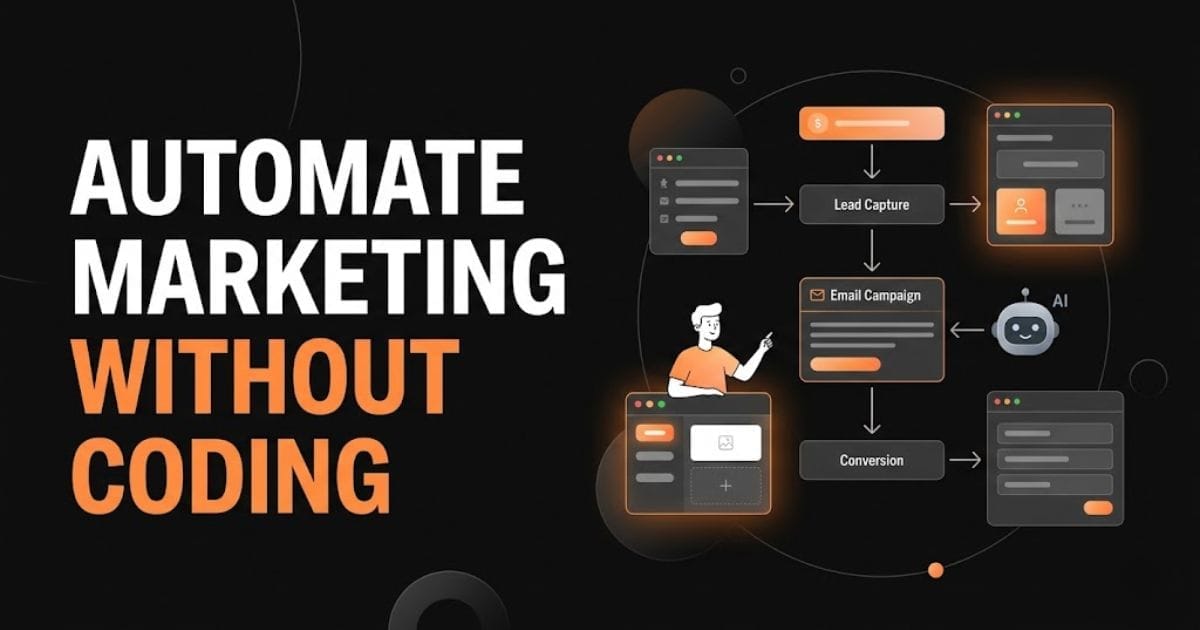
Visual workflow builders are the heart of the no-code movement. They allow you to see exactly how data moves from a lead magnet to your CRM through a simple map. You connect dots on a digital canvas to create a custom path for every person who interacts with your brand.
It is very similar to building with digital LEGO blocks. If you can draw a basic flow chart, you can automate a multi-channel business.
Setting Up Your First Automated Triggers
Every automation starts with a specific event known as one of many triggers. This could be a new form submission on your website or a user clicking a specific link in your weekly newsletter. Once the trigger fires, your software executes a series of actions automatically without any manual intervention.
Do not overthink your very first trigger. Just pick a boring, repetitive task and let the software take over the burden.
Managing Data Integration Across Platforms
Your marketing data should never live in an isolated silo. Proper data integration ensures that your email list, social media analytics, and sales figures all communicate with each other in real-time. This creates a single source of truth that your entire organization can rely on for decision-making.
No more manual CSV exports or messy spreadsheets. Your data will flow exactly where it needs to go.
Advanced Lead Nurturing and Drip Campaigns
Building a lasting relationship with your audience requires consistent communication. By following this No-Code Marketing Automation Guide for Beginners, you can set up lead nurturing sequences that respond dynamically to how a user behaves on your site. This ensures no potential customer falls through the cracks of your funnel.
Personalization is much easier when a machine handles the timing. Your leads will feel like you are speaking directly to their specific needs.
Organizing Effective Drip Campaigns
A high-performing drip campaign delivers the right message at the perfect moment. You can schedule these emails to send based on how many days a person has been on your list or which products they viewed. This keeps your brand at the front of their minds without you having to hit the send button every morning.
Consistency is the key to building brand trust. Trust eventually leads to higher conversion rates.
Refining Your Customer Journey Mapping
Visualizing the path from a total stranger to a loyal customer is vital for growth. Detailed customer journey mapping allows you to identify where people are dropping off and where they are engaging the most. You can use this No-Code Marketing Automation Guide for Beginners to fix those gaps with automated reminders or special offers.
Every touchpoint is a fresh opportunity to impress. Make sure none of those moments are wasted by a lack of follow-up.
Finding More AI Tools for Digital Marketers
The software market is flooded with new options every single week. Finding the right AI tools for digital marketers involves testing which platforms offer the best native connections with the apps you already use. Focus on tools that provide clear documentation and an easy interface for your specific team members.
The best AI tools for digital marketers are the ones that actually get used. Don’t get distracted by shiny features you don’t need.
Conclusion: The Future of Your Marketing Strategy
As you wrap up this No-Code Marketing Automation Guide for Beginners, you will realize how much potential you have been leaving on the table. Automation is not just about saving a few hours; it is about expanding what your team is capable of achieving with limited resources. You now have the knowledge to build a self-sustaining marketing engine.
You have the tools and the plan. It is time to go out and build something great.